
Convergent Evolution
Same problem, different climate

I walk and run around my local reservoir all the time, for years. All the plant life around that area was familiar to me, I thought, until I bumped into this beautiful flower.
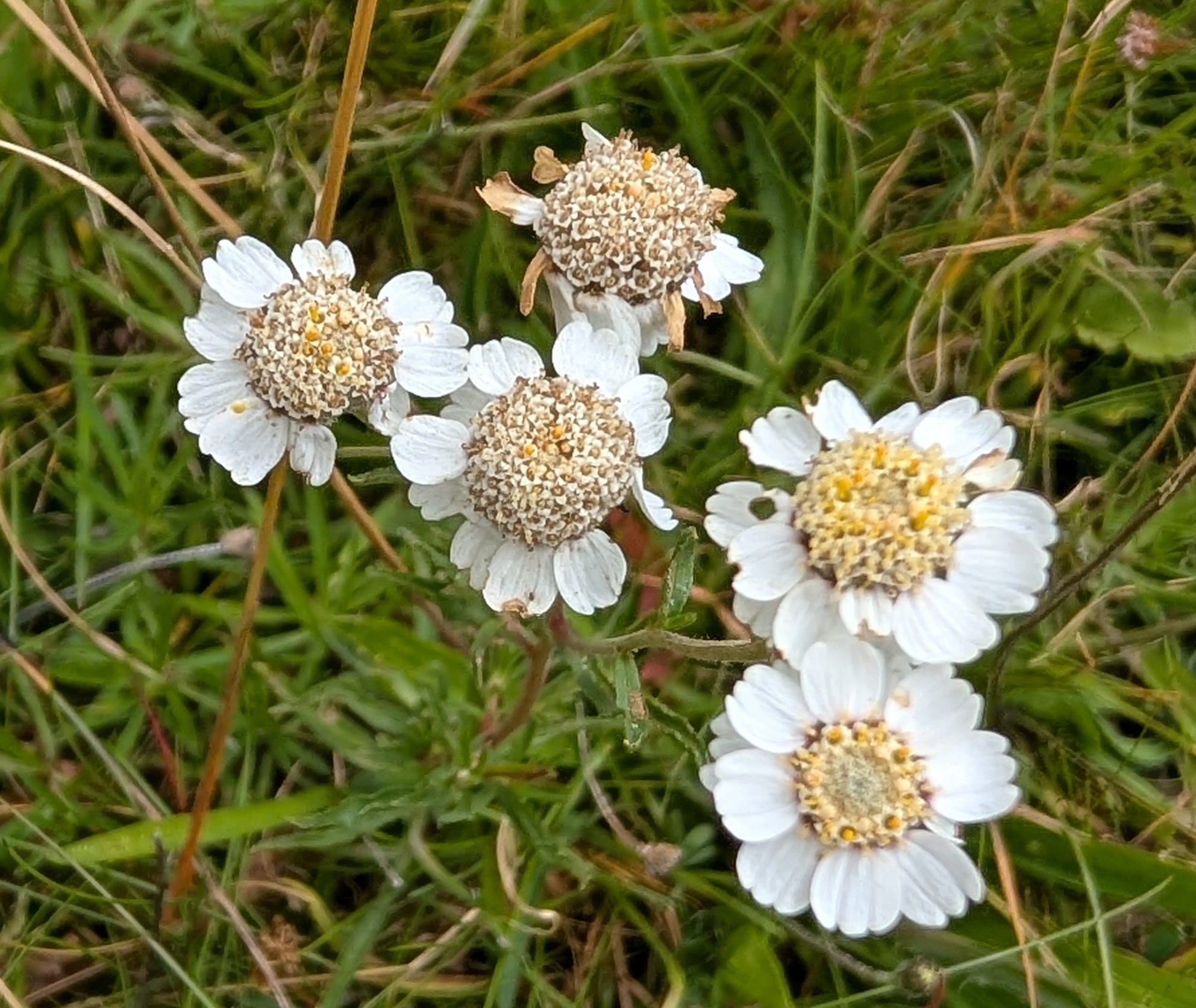
I thought it was a mutant Common Yarrow (Achillea millefolium, and I guess I should be proud that I’ve spent enough time with Yarrow to pin down the genus).
This little thing, however, is commonly called Sneezewort. What a wonderful name. Even the Latin name, Achillea ptarmica, means “causes sneezing”.
Something about the common caught in my mind like a splinter, and later that day I discovered that Sneezewort leaves, when chewed, cause a numbing and tingling sensation just like that famous Sichuan pepper.
There’s a famous traditional Chinese Sichuan dish called Mapo Tofu (麻婆豆腐), which is described
using seven specific Chinese adjectives: má 麻 (numbing), là 辣 (spicy hot), tàng 烫 (hot temperature), xiān 鲜 (fresh), nèn 嫩 (tender and soft), xiāng 香 (aromatic), and sū 酥 (flaky)
In this dish, that “numbing” sensation is derived from the Sichuan peppercorn.

Could this really be? Is the Sneezewort an overlooked “western” Sichuan pepper analog?
I have since learned that Achillea ptarmica and plants in the Zanthoxylum family both evolved to use fatty acid amides as a chemical defense against insects and herbivores. Sneezewort uses two amides called Pellitorine and Homospilanthol, whilst the Zanthoxylum family uses Hydroxy-α-sanshool.
On insects, these compounds act like neurotoxin.
For humans, a delicious spice.
What’s wild to me is the convergent evolution. These two plants aren’t even in the same super-clade. You have to go back more than a hundred million years to find their common ancestor (some eudicot). Yet, they both independently evolved the same defense mechanism.
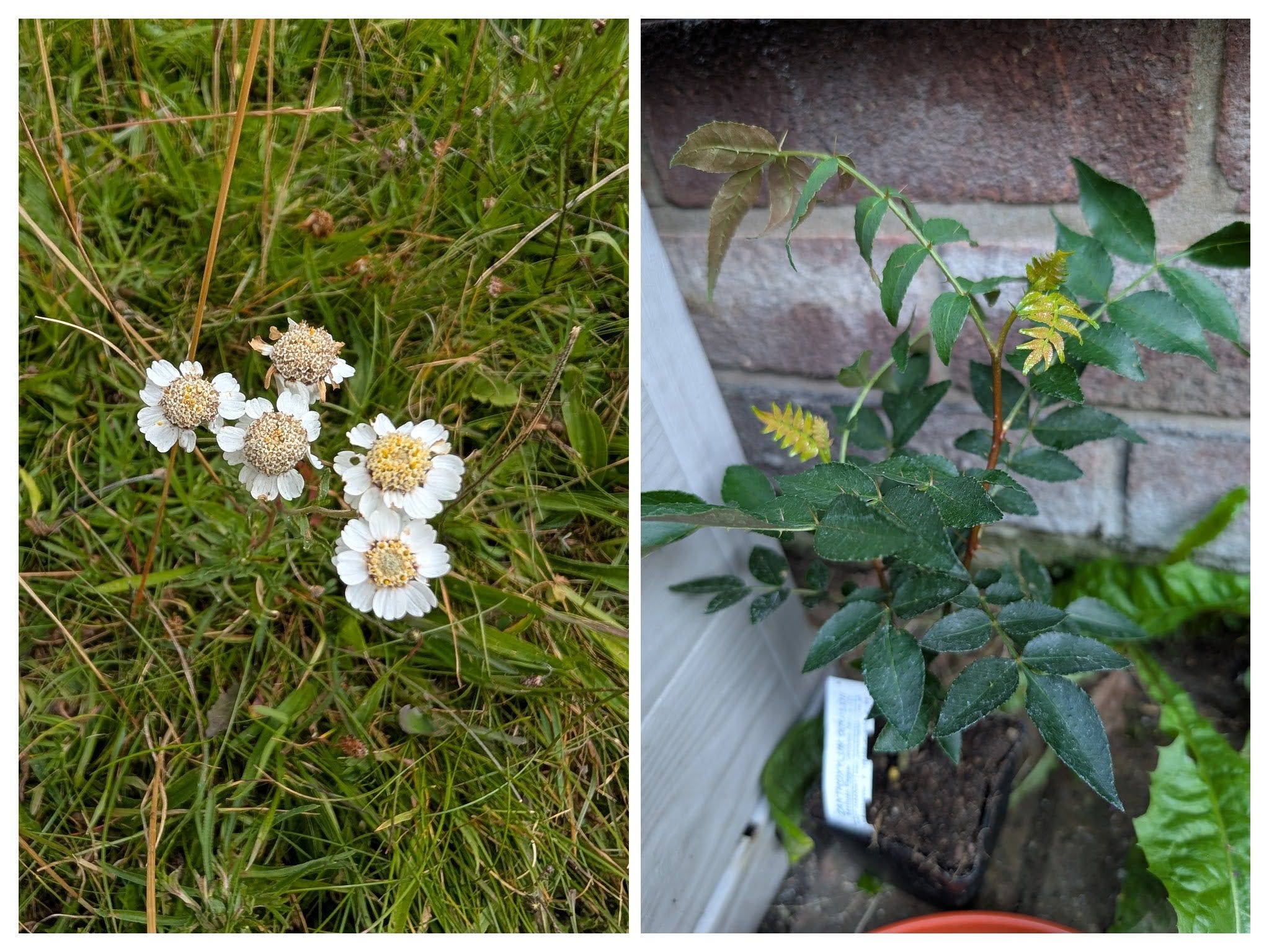
I’m waiting for the Sneezewort to set seed so I can grow one in my garden somewhere. And, of course, I had to get hold of a Zanthoxylum, in this case, Zanthoxylum giraldii to plant in an airpot.
I can then put these two plants side by side and marvel at convergent evolution.
Have you noticed any shared properties between the plants you grow?
Caffeine pops up all over the plant family tree, but its biochemistry is a pretty straight forward modification of a nucleobase. Very useful for keeping those worker bees pollinating if you put a little into your nectar, or to get caterpillars marching to their doom if you put higher doses in your leaves.
So cool. What about cocoa? Im seeing a lot of posts about roasting and grinding linden nuts to substitute for cocoa.